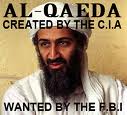
Spies, Lies & Geopolitics - The Safari Club and the birth of Al-Qaeda
Continuing with analysis of the Fifth Column that assisted the Islamo-fascists who perpetrated the 9/11 attacks, the program accesses information from a VERY important new book Prelude to Terror by Joseph J. Trento. In this book, the author sets forth information about the Safari Club, an “outsourced” intelligence network in which the Saudis financed a privatized espionage establishment that dominated American intelligence operations for the better part of a quarter of a century. Utilizing the Saudi GID and the Pakistani ISI as proxy agencies, this network ran the Iran-Contra, Iraqgate and Afghan mujahideen efforts. The most significant outgrowth of this network was the birth of al Qaeda, with all that has resulted from its conception. One of the points that Trento makes is the fact that outsourcing U.S. intelligence operations eliminated the necessary function of counterintelligence—monitoring one’s allies in order to verify their loyalty and competence. The failure to conform to this basic tenet of intelligence has haunted the U.S., and will continue to do so. It is important to note that the elder George Bush and the Reagan administrations were at the core of the Safari Club. The Safari Club was specifically created to circumvent Congressional and even Presidential oversight! Note that Mr. Emory incorrectly cited FTR#367 in his concluding remarks. The broadcast that details the subversion of France in the run-up to World War II is FTR#366. For more about the Fifth Column described here, see—among other programs—FTR#’s 412, 462, 464, 467, 474.
Program Highlights Include: The role of Prince Turki (Osama bin Laden’s case officer) in the Safari Club; the transfer of ultra-secret NSA software to the Saudis through the Safari Club; the capability of this NSA software to compromise the U.S. national security operations and law enforcement; the use of the Safari Club by the Saudis to spy on the United States; warnings by US intelligence analysts that we were backing the wrong Islamic elements in Afghanistan and that they would turn on us after the Soviets were defeated; the overruling of State Department employee Michael Springman when he tried to prevent dangerous Islamists from gaining visas to visit the United States; the Safari Club’s development of the BCCI as a financial base for funding highly illegal covert operations; the use of the Safari Club to develop the Islamic bomb (a subject that is covered at length in FTR#524.)
1. Beginning with a summary introduction of the material in Prelude to Terror (the superb, vitally important book from which the material in this program is excerpted), the program highlights the fundamental theme of the privatization of U.S. intelligence. As discussed throughout the program, the “outsourcing” of much of U.S. intelligence to a Saudi-dominated network called the Safari Club set the stage for the events of 9/11. The Safari Club appears to have been an essential element of the Fifth Column inside the U.S. and its national security establishment. That Fifth Column greatly facilitated the attacks of 9/11. “Prelude to Terror will focus on how the privatization of intelligence metamorphosed from an instrument of limited application in the 1950’s into a broad-based core operating model of significant proportions in the 1970’s and ‘80’s. Simultaneously, a secret alliance was forged with Saudi intelligence. This alliance was orchestrated by CIA covert management, without the knowledge of Congress, and, in some cases, even the president. Ultimately, as these two developments became increasingly intertwined, a dynamic of catastrophic proportions was created, one that left the United States with a severely compromised intelligence apparatus in the Middle East. . . .”
(Prelude to Terror; by Joseph Trento; Copyright 2005 by Joseph J. Trento; Carroll & Graf [HC]; ISBN 0–7867-1464–6; p. xi.)
2. The Safari Club began during the period when the elder George Bush was director of the CIA. Long an intimate of the Saudi power elite, the elder Bush (like his son) was deeply connected to the Saudi intelligence milieu at the core of the Safari Club. “ . . . During George Bush’s Zapata-Offshore years, he had met most of the Gulf region’s royals and had developed close personal relationships with several of them. When Saudi money began flowing into Texas in the 1970’s, Bush and his family became very friendly with the most influential Saudis living in the United States.” (Ibid.; p. 100.)
3. One of the Saudi intelligence chiefs that functioned at the House of Saud’s end of the Safari network was Kamal Adham. When pressed about his relationship with Adham, Bush dissembled. “The most important friendship Bush had was with a quiet, dignified man named Sheikh Kamal Adham, Director of Saudi Intelligence, whom Bush had met through his father. Bush has told reporters, ‘I never met Kamal Adham personally.’ But according to lawyers for the late Saudi intelligence head and several officials at the CIA who served under Bush, there were several official meetings inside and outside the United States, both before and after Bush was the DCI. ‘Bush and Kamal were old friends. I was present when they met in New York when Bush was still United Nations Ambassador,’ Sarkis Soghanalian said. Bush and Adham shared a fascination with intelligence. Bush also took a deep interest in the sheikh’s American-educated nephew, HRH Prince Turki bin Faisal Al Sa’ud.” (Idem.)
4. Eventually, Adham was succeeded by Prince Turki, who ran Osama bin Laden for many years, both before and after the Afghan war against the Soviets. (For more about the relationship between Prince Turki and Osama bin Laden, see FTR#343.) “Prince Tuki had been a subject of CIA interest ever since his father had sent him to prep school at the Lawrenceville School in New Jersey. Agency talent spotters on the faculty at Georgetown University kept close track of Turki until he dropped out of Georgetown University to return home at the outbreak of the 1967 war with Israel. After later completing his education in England, Turki again returned home to prepare himself to eventually succeed his uncle-Kamal Adham as Director of Saudi intelligence.” (Idem.)
5. Among the partners Turki had in his joint operations with the off-the shelf intelligence operations with elements of CIA were the associates of Edwin Wilson—Frank Terpil, Theodore Shackley and Thomas Clines, as well as their Cuban associates. (For more about this cast of characters, see—among other programs–RFA#’s 4, 29, 30, available from Spitfire.) “ ‘On his visits, here,’ Robert Crowley recalled, ‘Agency management made Turki welcome, knowing full well that at some point Saudi Arabia’s General Intelligence Department [GID] would fall under his control.’ As a young Saudi bureaucrat, Prince Turki was cultivated by various CIA operatives, including Shackley, Clines, and Te
rpil. In the early 1970’s, when Terpil and Wilson first started operations in Libya, Terpil set Wilson up with a Geneva lawyer named Robert Turrentini, who also handled banking matters for Turki. Terpil told Wilson that he went back years with Turki through Turki’s personal assistant. When Wilson needed financial backing in several large-scale operations, Prince Turki put up the cash. In 1992, Wilson said he shared millions of dollars with Turki in a Swiss bank account from an old operation.” (Ibid.; pp. 100–101.)
6. The official rationale for the establishment of the Safari Club was the alleged handicapping of U.S. intelligence by Congressional investigations of the 1970’s. Not mentioned in the passage quoted here is the fact that the House Select Committee on Assassinations was established at this time, looking into the assassinations of President Kennedy and Dr. Martin Luther King. It is Mr. Emory’s view that this investigation is the one that most vexed U.S. intelligence, not the tame Church Committee or the even tamer Rockefeller Commission. “Both Prince Turki and Sheikh Kamal Adham would play enormous roles in servicing a spy network designed to replace the official CIA while it was under Congressional scrutiny between the time of Watergate and the end of the Carter administration. The idea of using the Saudi royal family to bypass the American Constitution did not originate in the Kingdom. Adham was initially approached by one of the most respected and powerful men in Washington, Clark Clifford, who rose to power under Harry Truman and had enjoyed a relationship with the intelligence community for years. ‘Clark Clifford approached Kamal Adham and asked that the Saudis consider setting up an informal intelligence network outside the United States during the investigations,’ Robert Crowley said. Crowley, in his role as the CIA’s liaison to the corporate world, was privy to the plan, in which worldwide covert operations for the Agency were funded through a host of Saudi banking and charity enterprises. Several top U.S. military and intelligence officials directed the operations from positions they held overseas, notably former CIA director Richard Helms, at this time Ambassador to Iran.” (Ibid.; p. 101.)
7. Next, we see still more about the links between Edwin Wilson and associates and the Safari Club. Note that Thomas Clines claimed that the operations undertaken in conjunction with the Safari Club were ‘too sensitive to be revealed.’ Illegality appears to have been one of the things that could not be ‘revealed.’ “Ed Wilson and his associates supported the network. According to Wilson, Prince Turki was used to finance several of his intelligence operations during this time period. According to Wilson, the amounts were in the millions of dollars. According to Tom Clines, the relationship between the Saudis and the private U.S. intelligence network that grew out of the activities of Clines and his colleagues was ‘vital . . . these operations were so sensitive, they could not be revealed.’ Mike Pilgrim, who also played a role in the operations of the private network during the 1980’s said, ‘It got to the point where we were used to support GID operations when the CIA could not.’ According to those involved, there was no line drawn between what was official and what became personal business.” (Idem.)
8. “Prince Turki himself acknowledged the private network for the first time in an uncharacteristically candid speech given to Georgetown University alumni in February 2002: ‘And now I will go back to the secret that I promised to tell you. In 1976, after the Watergate matters took place here, your intelligence community was literally tied up by Congress. It could not do anything. It could not send spies, it could not write reports, and it could not pay money. In order to compensate for that, a group of countries got together in the hope of fighting Communism and established what was called the Safari Club. The Safari Club included France, Egypt, Saudi Arabia, Morocco, and Iran. The principal aim of this club was that we would share information with each other and help each other in countering Soviet influence worldwide, and especially in Africa. In the 1970’s, there were still some countries in Africa that were coming out of colonialism, among them Mozambique, Angola, and I think Djibouti. The main concern of everybody was that the spread of Communism was tied up. Congress had literally paralyzed the work not only of the U.S. intelligence community but of its foreign service as well. And so the Kingdom, with these countries, helped in some way, I believe, to keep the world safe at the time when the United States was not able to do that. That, I think, is a secret that many of you don’t know. I am not saying it because I look to tell secrets, but because the time has gone and many of the actors are gone as well.’” (Ibid.; p. 102.)
9. As recycled Saudi petro-dollars assumed an increasingly large position within the U.S. economy, the Saudi royal family underwrote U.S. intelligence. The relationship between economic relationships and the configuration of the intelligence community is an important one. Note that one of the principal financial institutions involved in the machinations of the Safari Club is the Riggs Bank. For more about Riggs Bank, use the search function to locate past “For The Record” broadcasts dealing with this subject. President Bush’s uncle Jonathan is a director of the Bank. “Turki’s ‘secret’ was that the Saudi royal family had taken over intelligence financing for the United States. It was during this period that the Saudis opened up a series of covert accounts at Riggs Bank in Washington. Starting in the mid-1970’s, bank investigators say, these accounts show that tens of millions of dollars were being transferred between CIA operational accounts and accounts controlled by Saudi companies and the Saudi embassy itself. Turki worked directly with agency operatives like Sarkis Soghanalian and Ed Wilson, ‘If I needed money for an operation, Prince Turki made it available,’ Wilson said. Clifford’s request for Saudi help came at a very critical time for the royal family. Although the House of Saud had long placated domestic conservative clerics by allowing an education system that targeted the West—especially the United States—as evil, they were still deathly afraid of the establishment of any Muslim fundamentalist regime in the region. Their interests included keeping the shah in charge in Teheran and keeping an eye on an increasingly militant Libya. Although normally Israeli and Saudi interests wee in conflict, in this case they converged. It was in the interest of Albert Hakim, Frank Terpil’s sometime employer, to serve as a bridge between the two.” (Ibid.; pp. 102–103.)
10. “Sarkis Soghanalian was close to Sheikh Kamal Adham during this period. Adham frequently asked Soghanalian ‘about what kind of shape the shah was in. he complained the CIA was not giving him the full picture of how the shah was losing control.’ Adham believed that that binding Saudi Arabia with the United States would increase the House of Saud’s chances of surviving an Islamic resurgence. ‘Believe me,’ Soghanalian said, ‘Kamal did not do these things out of charity, but survival.’” (Ibid.; p. 103.)
11. Note that among the benefits for Saudi intelligence was a comprehensive knowledge of U.S. intelligence operations. Coupled with the Saudis’ acquisition of sensitive keyword software developed by the NSA, the foundation was laid for a deep penetration of, and subversion of U.S. intelligence by those elements of Saudi intelligence, Pakistani intelligence and the Muslim Brotherhood that were sympathetic to Osama bin Laden. “Adham worked closely with George Bush on the plan to provide covert banking services for CIA operations. Like most things the Saudis do, there were benefits for the royal family. The arrangement would give the Saudis a comprehensive
knowledge of U.S. intelligence operations. [Italics are Mr. Emory’s.] In 1976, when the CIA needed an influx of cash for operations, Adham agreed to allow Nugan Hand Bank’s Bernie Houghton to open a branch in Saudi Arabia.” (Idem.)
12. Note the GID’s hiring of Wahhabi fundamentalists. This helped set the stage for the “turning” of the Saudi intelligence milieu on the U.S. in the wake of the Afghan war. “On the surface, the GID was organized along the same lines as a miniature version of the CIA, but the hiring of case officers was very different. Part of Prince Turki’s job was to reach out to mullahs to provide religious officers for the GID. Turki, perhaps the most savvy politician in the royal family, tried to recruit those who practiced the reform version of Islam fathered by Ibn Abd al-Wahhab. From an intelligence viewpoint, bringing the extreme Wahhabis into the GID would make them loyal to the royal family and help ensure the survival of the state.” (Idem.)
13. Eventually, the Safari Club relationship set the stage for the development of the Islamic bomb by the A.Q. Khan network. The role of the Safari Club milieu in the development of the Khan network will be discussed at greater length in FTR#524. For more about the A.Q. Khan network, use the Spitfire search function. “In 1975, the royal family was approached by Pakistan’s government for help in financing a pan-Islamic nuclear weapon. Adham and his advisers had simultaneously reached the conclusion that the royal family could not survive if they let the Israeli nuclear-weapons program stand unchallenged.” (Ibid.; pp. 103–104.)
14. Note the Safari Club’s decision to develop a pan-Islamic military capability. First used against the Soviets, it is now being used against the United States. “One of Adham’s closest American advisers said, ‘A decision was taken to pursue a two-track policy: placate religious Muslims by starting a covert effort to develop a pan-Islamic military capability. [Italics are Mr. Emory’s.] The second policy would be to operate in conjunction with the United States on undermining extreme Islamic movements that might lead to the installation of an Islamic state.’ The Saudis were adamant, however, that the funding for the Pakistani program be for research only and that no bomb be tested.” (Ibid.; p. 104.)
15. One of the primary vehicles for covert operations in the 1980’s was the BCCI. One cannot separate the milieu of the BCCI and that of 9/11. For more about the BCCI (in particular its relationship to the events of 9/11) use the search function, paying particular attention to FTR#’s 356, 391, 424, 462, 464, 485. Note that the elder George Bush had an account at the bank’s Paris branch. “Adham understood that creating a single worldwide clandestine bank was not enough to assure the kind of resources necessary to stave off the coming Islamic revolutions that threatened Saudi Arabia and the entire region. The Safari Club needed a network of banks to finance its intelligence operations. With the official blessing of George Bush as the head of the CIA, Adham transformed a small Pakistani merchant bank, the Bank of Credit and Commerce International (BCCI), into a worldwide money-laundering machine, buying banks around the world in order to create the biggest clandestine money network in history. Bush had an account with BCCI established at the time he was at the CIA. The account was set up at the Paris branch of the bank. Subsequent senate and other investigations concluded that the CIA, beginning with Bush, had protected the bank while it took part in illicit activities. One source who investigated the bank and provided information about the Bush account in Paris was Jacques Bardu, who, as a French customs official, raided the BCCI Paris branch and discovered the account in Bush’s name.” (Idem.)
16. “Time magazine reported that the bank had its own spies, hit men, and enforcers. What no one reported at the time was that the bank was being used by the United States and Saudi Arabia as an intelligence front.” (Idem.)
17. “There had never been anything like it. Paul Helliwell may have made the mold, but Adham and BCCI founder Sheikh Agha Hasan Abedi smashed it. They contrived, with Bush and other intelligence-service heads, a plan that seemed too good to be true. The bank would solicit the business of every major terrorist, rebel, and underground organization in the world. The invaluable intelligence thus gained would be discreetly distributed to ‘friends’ of BCCI. According to Wilson and Crowley, Bush ordered Raymond Close, the CIA’s top man in Saudi Arabia, to work closely with Adham.” (Ibid.; pp. 104–105.)
18. According to author Joseph Trento’s sources, the late Anwar Sadat was paid through the BCCI. “Adham had other important roles too. He arranged through DCI Bush to put Egypt’s Vice President Anwar Sadat on an intelligence-agency payroll for the first time. This made Adham, in effect, Sadat’s case officer. This relationship gave Adham leverage when the time came to persuade Sadat to sign the Camp David Accords.” (Ibid.; p. 105.)
19. Note again the Saudis’ use of the Safari Club and its various elements (including the BCCI) to monitor U.S. intelligence. “Adham and Abedi believed the United States needed monitoring. [Italics are Mr. Emory’s.] After Adham left the GID in 1977, he and Abedi, using Clark Clifford, began infiltrating the American banking system with surreptitious purchases of major regional banks. Because Adham, through his relationships with Shackley and Bush, had intimate knowledge of just how desperate U.S. intelligence was for the services of a convenient, Washington, D.C.-based bank, acquiring one became one of his main goals. Meanwhile, as Clifford was making the connection between the CIA and Adham, he was also calling on Attorney General Edward Levi to kill the probe—of the perjury investigation of Helms’s lying to the Senate about Chile—that was threatening the future of Shackley and Helms, as well as the use of the Safari Club.” (Idem.)
20. Note that the Safari Club’s BCCI had a “black network” of assassins and enforcers. “Adham did not rely simply on money to carry out the plan. Adham and Abedi understood that they would also need muscle. They tapped into the CIA’s stockpile of misfits and malcontents to help man a 1,500-strong group of assassins and enforcers. Time magazine called this group a ‘black network.’ It combined intelligence with an effort to control a large portion of the world’s economy. . . .” (Idem.)
21. Of particular significance in analyzing the development of the 9/11 Fifth Column is the momentum developed by the Safari Club. During the Afghan war against the Soviets, those few CIA analysts who understood the potential danger presented by Osama bin Laden and his Muslim Brotherhood mentor and military ally Abdullah Azzam were rebuffed. Despite clear indications that the “pan-Islamic military capability” could be turned against the U.S., the Cold War dictum of “any bastard as long as he’s anti-communist” held sway. (This term was first used by Allan Dulles to rebuff colleagues who objected to his recruitment of Nazis to serve in the CIA.) “ . . . A year before the good folks at the CIA’s Afghan desk popped open the champagne in celebration of the Soviet pullout, Osama bin L
aden planned his move into the vacuum that would follow the end of the war. Bin Laden’s goal was not just victory in Afghanistan, but a worldwide jihad against the West—a jihad that would engulf his home country and wash the entire region clean of the influence of the ‘crusading infidels,’ The Saudi royal family continued to believe that throwing money at military and social problems would secure the family’s future and access to the Kingdom’s petrodollars. But the Saudis’ compromise with the Wahhabi mullahs had radicalized several generations of Saudis. The increasingly angry populace, deprived of any serious share of the oil wealth, watched helplessly as average annual incomes were cut in half, from a high of $13,000 in 1981 to $6,000 by 2003.)” (Ibid.; pp. 338–339.)
22. Note that the DIA was told to back off the Saudis, when it sounded the alarm that they were funding terrorists. “As with the last years of the Peacock Throne in Iran, the CIA, reliant on the Saudi GID and the Pakistani ISI for regional intelligence, did not warn the president of the danger ahead. When the Defense Intelligence Agency recommended that the Saudis needed to be monitored because they were funding terrorists, the DIA was told to discontinue all eavesdropping, operations targeting the Kingdom, according to the DIA official in charge of the program, who wishes to remain anonymous.” (Ibid.; p. 339.)
23. The FBI was also prevented from pursuing criminal investigations of the Saudis. “CIA officials were blind to the flaws of their Saudi benefactors. It had gotten so extreme that the CIA station chiefs, starting in the 1980’s, actually protected the head of Saudi Intelligence, Prince Turki, and the GID and the Interior Ministry from the FBI on criminal matters. The CIA insulated the Kingdom from the United States’ own law enforcement officials. When a shy and religious Osama bin Laden went to Kabul to ‘help,’ it is not surprising that men like CIA officer Milton Bearden ‘did not pay much attention to bin Laden.’ By giving him an intelligence portfolio with the GID operating in Pakistan and Afghanistan, the Saudis let a man in the tent who brilliantly exploited the opportunity by recruiting among the Wahhabis. As success came to bin Laden, the GID allowed him more and more scope, including recommendations for recruitment for GID and Interior Ministry. Bin Laden was positioned to do enormous damage to the Saudi Kingdom and to the United States.” (Idem.)
24. Author Trento notes the absence of counterintelligence capability available to U.S. intelligence, because its proxies—the Saudi GID and Pakistani ISI—were operating without monitoring. These agencies were largely hostile to the United States, and elements of both are implicated in the events of 9/11. “Because the CIA had effectively given up independent recruitment in the region, the United States was operating without a safety net—without the ability to detect someone like bin Laden commandeering the anti-Soviet cause. ‘You were relying on two intelligence services [the GID and ISI] to act in the United States’ best interest without any ability to verify their promises or their work,’ a high-level CIA official said. ‘That is what the Agency had become—simply a group of bureaucrats writing checks. We had no control over what was being done with the money and we deliberately ignored danger signs—and there were plenty.’” (Idem.)
25. Consider the grave, devastating implications of what follows. Of what use would the keyword software given to the Saudis have been for those elements of Saudi intelligence hostile to the United States? It does not require a great leap of imagination to see this kind of transaction having set the stage for the stunning role of Ptech in administering America’s air defenses. For more about Ptech and the implications of this firm for the anomalous performance of American air defenses on 9/11, see FTR#’s 462, 464. “ ‘To make matters worse,’ the official continued, ‘the CIA permitted U.S. Customs at Dulles Airport to overlook an illegal export of our most secret eavesdropping software to Saudi Arabia.’ The software, referred to as ‘key word software,’ is a computer code developed for the National Security Agency by a company called E Systems. The software allows key words and phrases to be flagged by computers from targeted voice and other communications in real time. The problem with exporting the software is that any country getting it could use it to target U.S. interests and allies. It could even be used to track what U.S. law enforcement, military, and intelligence agencies were doing. [Italics are Mr. Emory’s. Consider the implications of this for the events in and around 9/11.] Lewis Sams, the man E Systems ordered to deliver the software to the Kingdom, said, ‘I was very nervous when I got to the airport. I knew it was illegal to take it out of the country, but I was given the name of a Customs official at Dulles Airport and told if there were any problems to ask for him. . . . E Systems’ desire to do business with the royal family was why I thought they sent me.’ Sams said that E Systems, which had close ties to the White House, maintained the secret communications gear for Air Force One. As it turned out, E Systems did not get the contract for Saudi Intelligence, but the software was left with GID officials even so, according to Sams.” (Ibid.; p. 340.)
26. More about the Safari Club and the manner in which it circumvented the primary tenets of counterintelligence: “Among the problems with using a private intelligence network is that the benefits of counterintelligence are not available. And if your private network is essentially funded by another country, you are flouting a basic tenet of intelligence–trust no one, including your allies. The purpose of counterintelligence is to test the veracity and honesty of sources and allies, and to protect secrets. When an illegal network of private businesses and secret alliances carries out a nation’s covert operations, counterintelligence is not possible. In the early 1990’s, the cost of not having any counterintelligence capability would soar.” (Idem.)
27. “The absence of CI became a growing problem as the United States relied more and more and more on proxy intelligence operations through other countries and private organizations. The lack of vetting of those involved in Iran-Contra and Saddam’s regime, and finally of those who supplied the George W. Bush administration with false intelligence on Iraq all demonstrate how devastating the lack of a counterintelligence capability can be.” (Ibid.; pp. 340–341.)
28. More about the failure of U.S. intelligence to heed the warnings of those relatively few analysts who, before the end of the Afghan war against the Soviets, envisioned the threat that the bin Laden/Azzam axis represented for the United States: “In the tumultuous times of 1988 and 1989, a handful of ‘second-guessers’ and ‘naysayers’ at the CIA warned that the country had allied itself with the wrong people in Afghanistan, but they were not being listened to. The idea that our closest allies in Afghanistan could turn against us was not even given consideration.” (Ibid.; p. 341.)
29. “When Osama bin Laden attended events in Kabul in support of the mujahideen, his presence raised no curiosity in the U.S. intelligence community. Reports on bin Laden were neither critical nor probing. The relationship between the new president and the bin Laden family was no secret at the CIA, and they cozily assumed Osama was on our side. For the CIA to miss the scale of the Saudi-funded Pakistani nuclear-weapons program is an example of the woeful intelligence produced by the CIA during this period. But missing the transformation of Osama bin Laden from the shy son of one of the most
prominent families in Saudi Arabia to the leader of a terrorist network supported by ISI and GID officials in Pakistan and Afghanistan was pure operational negligence.” (Idem.)
30. “In many ways, bin Laden represented the penultimate compromise of the House of Saud. While half of the royal family recognized the need to do business with the West, the other half felt uncomfortable with the ways of the West. The initial intelligence failure took place in 1979 and 1980, when the CIA failed to see the connection between bin Laden and hundreds of his family’s construction workers and heavy equipment operators moving into the Afghan war zone at the same time the GID dispatched there the most charismatic Muslim leader of the time, Palestinian Muslim Brotherhood leader Abdullah Azzam. Azzam joined forces with bin Laden in opening a recruiting center—Maktab al-Khidamat (MAK—Services Office.) Though this was all fully known to the CIA, the Agency’s regional experts asked no questions. Amazingly enough, no one in the CIA’s Afghan operation even asked why a Palestinian leader had suddenly turned up in Afghanistan. CIA money was actually funneled to MAK, since it was recruiting young Muslim men to come join the jihad in Afghanistan. (This information comes from a former CIA officer who actually filed these reports; we can’t identify him here because at the time of the writing of this book, he was back in Afghanistan as a private contractor.)” (Ibid.; pp. 341–342.)
31. Despite Azzam’s hostility to the United States and Israel, the MAK was allowed to recruit and train in the United States! “Azzam, a Palestinian by birth, had been forced years before to flee to Jordan and then to Saudi Arabia. In Peshawar, Azzam, funded by bin Laden and GID, opened the Office of Services of the Holy Warriors (Mujahideen). Azzam’s message was clearly anti-Israeli and anti-American. And yet bin Laden’s opening MAK branch offices in the United States, Europe, and Asia was applauded by the CIA. [Italics are Mr. Emory’s.] The Agency never suspected that bin Laden might have had bigger plans than Afghanistan. While bin Laden paid for the transportation of the new fighters to the war zone, the Saudi network of charities helped take care of their families.” (Ibid.; p. 342.)
32. “Bin Laden’s army was one of seven major mujahideen armies supported by the CIA’s $500-million-a-year program. After the victory over the Soviets, many of the Islamic warriors went home. They took with them the kind of confidence that can be gained only by helping to take out a greatly superior force. Bin Laden recognized that their experience and radicalism could change the face of the Islamic world. He kept the mujahideen training camps in Afghanistan in operation and expanded his efforts by spreading the holy war to Somalia, Bosnia, Kosovo, the Philippines, and Chechnya. The network was spreading, and, despite subsequent denials, there is incontrovertible evidence that the CIA’s knowledge was far deeper than it has been willing to admit.” (Idem.)
33. Embodying and exemplifying the failure of U.S. intelligence is the experience of Michael Springman, a State Department officer in Saudi Arabia who had “red-flagged” visa applicants to the United States, only to have his decisions overruled by superiors. “An American consular officer in Saudi Arabia discovered first hand that the CIA was allowing Afghan ‘freedom fighters’ to get visas to come to the United States during and after the Afghan War. Michael Springman, now a lawyer in Washington, D.C., was then an officer in the U.S. Consulate in Jeddah. Springman repeatedly confronted his bosses about their approval of questionable visa applications. At first, Springman suspected that one of his bosses was corrupt and was selling visas to people who would never normally be admitted to the United States. Springman pushed so hard for answers that he was eventually warned to do what he was told. ‘In Saudi Arabia, I was repeatedly ordered by high-level State Department officials to issue visas to unqualified applicants. . . . I complained bitterly at the time. . . . I returned to the U.S. I complained to the State Department here, to the General Accounting Office, to the Bureau of Diplomatic Security, and to the Inspector General’s office. I was met with silence.’” (Ibid.; pp. 342–343.)
34. “As Springman kept pushing for an explanation, his fitness evaluations became more critical of him and he was eventually dismissed. It took him years to find out that Jeddah was the center of the GID/CIA recruiting operation. Springman said he should have been suspicious even before he was first sent to Jeddah: ‘I had gotten some strange questions before I went out to Jeddah from the then-ambassador, Walter Cutler, who kept talking about visa problems. He said how I should do my best to make sure that everything ran smoothly. Once I got there, I found I was being ordered to issue visas to people who really should not have gotten a visa. I’ll give you just one example. There were two Pakistanis who wanted to go to an American trade show in the United States. They claimed they were going with a Commerce Department-sponsored trade mission. These guys couldn’t name the trade show and they couldn’t name the city in which it was being held. When I refused the visa after a couple minutes of questioning, I got an almost immediate call from a CIA case officer, hidden in the commercial section [of the consulate], that I should reverse myself and grant these guys a visa. I told, ‘No.’ Not long afterwards, he went to the Chief of the Consular section and got my decision reversed.’ This was exactly contrary to normal operating procedures. ‘Essentially, in the State Department, the guy doing the interviewing has the first, last, and usually the only word regarding visa issuances. He can be reversed if it was done not according to regulation, for example. If somebody comes up with additional information that’s material, you can push for a change in the petition. But this was one of a pattern. . . . Week after week after week, and they got more brazen and blatant about it. And I was told on occasion, ‘Well, you know, if you want a job in the State Department in the future, you will change your mind.’ And other people would simply say, ‘You can change your mind now or wait until the Consul General reverses you.’ I learned later it was basically the CIA that had Osama bin Laden recruiting people for the Afghan War and taking them to the U.S. for terrorist training.’” (Ibid.; pp. 343–344.)
35. Note that al Qaeda was founded in 1988, before the Soviets were driven out of Afghanistan. Note that, by this time, bin Laden was already allied with Said Ramadan’s Muslim Brotherhood faction. (For more about Ramadan, use the Spitfire search function, taking particular care to examine FTR#’s 343, 381, 455, 456, 518.) “ . . . In 1988, Abdallah Azzam and Osama bin Laden founded the secret organization later known as al Qaeda. The purpose of the organization was to continue to the jihad beyond the victory over the Soviets. Members swore a blood oath to do this. Quickly, however, Azzam began to complain that the movement was not ready to go outside of Afghanistan until it secured a homeland for the Palestinians. Bin Laden had already allied himself with Said Ramadan’s branch of the Muslim Brotherhood and was looking at change far beyond Afghanistan. He essentially ignored the Palestinians. The arguments between bin Laden and Azzam ended in late 1989 when Azzam died in a car-bombing. . . .” (Ibid.; p. 344.)
http://stevenjohnhibbs.wordpress.com/2010/09/05/cia-drug-running-terrorists-the-imperial-anatomy-of-al-qaeda/
| The Safari Club and the birth of Al-Qaeda | by Remixed for everyone |
Just some copy-paste items, pushed for time again; but I wanted to share this here, it represents much better the kind of research this group was put here for in the first place. I think we lost our way, it was never about debating with the enemy. It was about shining a light on them, on the truth, but with a slightly more mature approach, removed from some of the more outrageous 'conspiracy theory' mania. For my part, having to be impartial all the time has been sapping my energy and I wish to return to researching the things that really matter, like this, here. If I had my way, SLG would drop the US pro-corporate far-right altogether and grow with the genuinely interested base we have... but I don't have my way, we are democratic and shall remain so. As always, those who most need to read and absorb the information here, won't. Everyone else, I hope this is enlightening and useful. RP
 http://spitfirelist.com/for-the-record/ftr-522-the-safari-club/
http://spitfirelist.com/for-the-record/ftr-522-the-safari-club/Continuing with analysis of the Fifth Column that assisted the Islamo-fascists who perpetrated the 9/11 attacks, the program accesses information from a VERY important new book Prelude to Terror by Joseph J. Trento. In this book, the author sets forth information about the Safari Club, an “outsourced” intelligence network in which the Saudis financed a privatized espionage establishment that dominated American intelligence operations for the better part of a quarter of a century. Utilizing the Saudi GID and the Pakistani ISI as proxy agencies, this network ran the Iran-Contra, Iraqgate and Afghan mujahideen efforts. The most significant outgrowth of this network was the birth of al Qaeda, with all that has resulted from its conception. One of the points that Trento makes is the fact that outsourcing U.S. intelligence operations eliminated the necessary function of counterintelligence—monitoring one’s allies in order to verify their loyalty and competence. The failure to conform to this basic tenet of intelligence has haunted the U.S., and will continue to do so. It is important to note that the elder George Bush and the Reagan administrations were at the core of the Safari Club. The Safari Club was specifically created to circumvent Congressional and even Presidential oversight! Note that Mr. Emory incorrectly cited FTR#367 in his concluding remarks. The broadcast that details the subversion of France in the run-up to World War II is FTR#366. For more about the Fifth Column described here, see—among other programs—FTR#’s 412, 462, 464, 467, 474.
Program Highlights Include: The role of Prince Turki (Osama bin Laden’s case officer) in the Safari Club; the transfer of ultra-secret NSA software to the Saudis through the Safari Club; the capability of this NSA software to compromise the U.S. national security operations and law enforcement; the use of the Safari Club by the Saudis to spy on the United States; warnings by US intelligence analysts that we were backing the wrong Islamic elements in Afghanistan and that they would turn on us after the Soviets were defeated; the overruling of State Department employee Michael Springman when he tried to prevent dangerous Islamists from gaining visas to visit the United States; the Safari Club’s development of the BCCI as a financial base for funding highly illegal covert operations; the use of the Safari Club to develop the Islamic bomb (a subject that is covered at length in FTR#524.)
1. Beginning with a summary introduction of the material in Prelude to Terror (the superb, vitally important book from which the material in this program is excerpted), the program highlights the fundamental theme of the privatization of U.S. intelligence. As discussed throughout the program, the “outsourcing” of much of U.S. intelligence to a Saudi-dominated network called the Safari Club set the stage for the events of 9/11. The Safari Club appears to have been an essential element of the Fifth Column inside the U.S. and its national security establishment. That Fifth Column greatly facilitated the attacks of 9/11. “Prelude to Terror will focus on how the privatization of intelligence metamorphosed from an instrument of limited application in the 1950’s into a broad-based core operating model of significant proportions in the 1970’s and ‘80’s. Simultaneously, a secret alliance was forged with Saudi intelligence. This alliance was orchestrated by CIA covert management, without the knowledge of Congress, and, in some cases, even the president. Ultimately, as these two developments became increasingly intertwined, a dynamic of catastrophic proportions was created, one that left the United States with a severely compromised intelligence apparatus in the Middle East. . . .”
(Prelude to Terror; by Joseph Trento; Copyright 2005 by Joseph J. Trento; Carroll & Graf [HC]; ISBN 0–7867-1464–6; p. xi.)
2. The Safari Club began during the period when the elder George Bush was director of the CIA. Long an intimate of the Saudi power elite, the elder Bush (like his son) was deeply connected to the Saudi intelligence milieu at the core of the Safari Club. “ . . . During George Bush’s Zapata-Offshore years, he had met most of the Gulf region’s royals and had developed close personal relationships with several of them. When Saudi money began flowing into Texas in the 1970’s, Bush and his family became very friendly with the most influential Saudis living in the United States.” (Ibid.; p. 100.)
3. One of the Saudi intelligence chiefs that functioned at the House of Saud’s end of the Safari network was Kamal Adham. When pressed about his relationship with Adham, Bush dissembled. “The most important friendship Bush had was with a quiet, dignified man named Sheikh Kamal Adham, Director of Saudi Intelligence, whom Bush had met through his father. Bush has told reporters, ‘I never met Kamal Adham personally.’ But according to lawyers for the late Saudi intelligence head and several officials at the CIA who served under Bush, there were several official meetings inside and outside the United States, both before and after Bush was the DCI. ‘Bush and Kamal were old friends. I was present when they met in New York when Bush was still United Nations Ambassador,’ Sarkis Soghanalian said. Bush and Adham shared a fascination with intelligence. Bush also took a deep interest in the sheikh’s American-educated nephew, HRH Prince Turki bin Faisal Al Sa’ud.” (Idem.)
4. Eventually, Adham was succeeded by Prince Turki, who ran Osama bin Laden for many years, both before and after the Afghan war against the Soviets. (For more about the relationship between Prince Turki and Osama bin Laden, see FTR#343.) “Prince Tuki had been a subject of CIA interest ever since his father had sent him to prep school at the Lawrenceville School in New Jersey. Agency talent spotters on the faculty at Georgetown University kept close track of Turki until he dropped out of Georgetown University to return home at the outbreak of the 1967 war with Israel. After later completing his education in England, Turki again returned home to prepare himself to eventually succeed his uncle-Kamal Adham as Director of Saudi intelligence.” (Idem.)
5. Among the partners Turki had in his joint operations with the off-the shelf intelligence operations with elements of CIA were the associates of Edwin Wilson—Frank Terpil, Theodore Shackley and Thomas Clines, as well as their Cuban associates. (For more about this cast of characters, see—among other programs–RFA#’s 4, 29, 30, available from Spitfire.) “ ‘On his visits, here,’ Robert Crowley recalled, ‘Agency management made Turki welcome, knowing full well that at some point Saudi Arabia’s General Intelligence Department [GID] would fall under his control.’ As a young Saudi bureaucrat, Prince Turki was cultivated by various CIA operatives, including Shackley, Clines, and Te
rpil. In the early 1970’s, when Terpil and Wilson first started operations in Libya, Terpil set Wilson up with a Geneva lawyer named Robert Turrentini, who also handled banking matters for Turki. Terpil told Wilson that he went back years with Turki through Turki’s personal assistant. When Wilson needed financial backing in several large-scale operations, Prince Turki put up the cash. In 1992, Wilson said he shared millions of dollars with Turki in a Swiss bank account from an old operation.” (Ibid.; pp. 100–101.)
6. The official rationale for the establishment of the Safari Club was the alleged handicapping of U.S. intelligence by Congressional investigations of the 1970’s. Not mentioned in the passage quoted here is the fact that the House Select Committee on Assassinations was established at this time, looking into the assassinations of President Kennedy and Dr. Martin Luther King. It is Mr. Emory’s view that this investigation is the one that most vexed U.S. intelligence, not the tame Church Committee or the even tamer Rockefeller Commission. “Both Prince Turki and Sheikh Kamal Adham would play enormous roles in servicing a spy network designed to replace the official CIA while it was under Congressional scrutiny between the time of Watergate and the end of the Carter administration. The idea of using the Saudi royal family to bypass the American Constitution did not originate in the Kingdom. Adham was initially approached by one of the most respected and powerful men in Washington, Clark Clifford, who rose to power under Harry Truman and had enjoyed a relationship with the intelligence community for years. ‘Clark Clifford approached Kamal Adham and asked that the Saudis consider setting up an informal intelligence network outside the United States during the investigations,’ Robert Crowley said. Crowley, in his role as the CIA’s liaison to the corporate world, was privy to the plan, in which worldwide covert operations for the Agency were funded through a host of Saudi banking and charity enterprises. Several top U.S. military and intelligence officials directed the operations from positions they held overseas, notably former CIA director Richard Helms, at this time Ambassador to Iran.” (Ibid.; p. 101.)
7. Next, we see still more about the links between Edwin Wilson and associates and the Safari Club. Note that Thomas Clines claimed that the operations undertaken in conjunction with the Safari Club were ‘too sensitive to be revealed.’ Illegality appears to have been one of the things that could not be ‘revealed.’ “Ed Wilson and his associates supported the network. According to Wilson, Prince Turki was used to finance several of his intelligence operations during this time period. According to Wilson, the amounts were in the millions of dollars. According to Tom Clines, the relationship between the Saudis and the private U.S. intelligence network that grew out of the activities of Clines and his colleagues was ‘vital . . . these operations were so sensitive, they could not be revealed.’ Mike Pilgrim, who also played a role in the operations of the private network during the 1980’s said, ‘It got to the point where we were used to support GID operations when the CIA could not.’ According to those involved, there was no line drawn between what was official and what became personal business.” (Idem.)
8. “Prince Turki himself acknowledged the private network for the first time in an uncharacteristically candid speech given to Georgetown University alumni in February 2002: ‘And now I will go back to the secret that I promised to tell you. In 1976, after the Watergate matters took place here, your intelligence community was literally tied up by Congress. It could not do anything. It could not send spies, it could not write reports, and it could not pay money. In order to compensate for that, a group of countries got together in the hope of fighting Communism and established what was called the Safari Club. The Safari Club included France, Egypt, Saudi Arabia, Morocco, and Iran. The principal aim of this club was that we would share information with each other and help each other in countering Soviet influence worldwide, and especially in Africa. In the 1970’s, there were still some countries in Africa that were coming out of colonialism, among them Mozambique, Angola, and I think Djibouti. The main concern of everybody was that the spread of Communism was tied up. Congress had literally paralyzed the work not only of the U.S. intelligence community but of its foreign service as well. And so the Kingdom, with these countries, helped in some way, I believe, to keep the world safe at the time when the United States was not able to do that. That, I think, is a secret that many of you don’t know. I am not saying it because I look to tell secrets, but because the time has gone and many of the actors are gone as well.’” (Ibid.; p. 102.)
9. As recycled Saudi petro-dollars assumed an increasingly large position within the U.S. economy, the Saudi royal family underwrote U.S. intelligence. The relationship between economic relationships and the configuration of the intelligence community is an important one. Note that one of the principal financial institutions involved in the machinations of the Safari Club is the Riggs Bank. For more about Riggs Bank, use the search function to locate past “For The Record” broadcasts dealing with this subject. President Bush’s uncle Jonathan is a director of the Bank. “Turki’s ‘secret’ was that the Saudi royal family had taken over intelligence financing for the United States. It was during this period that the Saudis opened up a series of covert accounts at Riggs Bank in Washington. Starting in the mid-1970’s, bank investigators say, these accounts show that tens of millions of dollars were being transferred between CIA operational accounts and accounts controlled by Saudi companies and the Saudi embassy itself. Turki worked directly with agency operatives like Sarkis Soghanalian and Ed Wilson, ‘If I needed money for an operation, Prince Turki made it available,’ Wilson said. Clifford’s request for Saudi help came at a very critical time for the royal family. Although the House of Saud had long placated domestic conservative clerics by allowing an education system that targeted the West—especially the United States—as evil, they were still deathly afraid of the establishment of any Muslim fundamentalist regime in the region. Their interests included keeping the shah in charge in Teheran and keeping an eye on an increasingly militant Libya. Although normally Israeli and Saudi interests wee in conflict, in this case they converged. It was in the interest of Albert Hakim, Frank Terpil’s sometime employer, to serve as a bridge between the two.” (Ibid.; pp. 102–103.)
10. “Sarkis Soghanalian was close to Sheikh Kamal Adham during this period. Adham frequently asked Soghanalian ‘about what kind of shape the shah was in. he complained the CIA was not giving him the full picture of how the shah was losing control.’ Adham believed that that binding Saudi Arabia with the United States would increase the House of Saud’s chances of surviving an Islamic resurgence. ‘Believe me,’ Soghanalian said, ‘Kamal did not do these things out of charity, but survival.’” (Ibid.; p. 103.)
11. Note that among the benefits for Saudi intelligence was a comprehensive knowledge of U.S. intelligence operations. Coupled with the Saudis’ acquisition of sensitive keyword software developed by the NSA, the foundation was laid for a deep penetration of, and subversion of U.S. intelligence by those elements of Saudi intelligence, Pakistani intelligence and the Muslim Brotherhood that were sympathetic to Osama bin Laden. “Adham worked closely with George Bush on the plan to provide covert banking services for CIA operations. Like most things the Saudis do, there were benefits for the royal family. The arrangement would give the Saudis a comprehensive
knowledge of U.S. intelligence operations. [Italics are Mr. Emory’s.] In 1976, when the CIA needed an influx of cash for operations, Adham agreed to allow Nugan Hand Bank’s Bernie Houghton to open a branch in Saudi Arabia.” (Idem.)
12. Note the GID’s hiring of Wahhabi fundamentalists. This helped set the stage for the “turning” of the Saudi intelligence milieu on the U.S. in the wake of the Afghan war. “On the surface, the GID was organized along the same lines as a miniature version of the CIA, but the hiring of case officers was very different. Part of Prince Turki’s job was to reach out to mullahs to provide religious officers for the GID. Turki, perhaps the most savvy politician in the royal family, tried to recruit those who practiced the reform version of Islam fathered by Ibn Abd al-Wahhab. From an intelligence viewpoint, bringing the extreme Wahhabis into the GID would make them loyal to the royal family and help ensure the survival of the state.” (Idem.)
13. Eventually, the Safari Club relationship set the stage for the development of the Islamic bomb by the A.Q. Khan network. The role of the Safari Club milieu in the development of the Khan network will be discussed at greater length in FTR#524. For more about the A.Q. Khan network, use the Spitfire search function. “In 1975, the royal family was approached by Pakistan’s government for help in financing a pan-Islamic nuclear weapon. Adham and his advisers had simultaneously reached the conclusion that the royal family could not survive if they let the Israeli nuclear-weapons program stand unchallenged.” (Ibid.; pp. 103–104.)
14. Note the Safari Club’s decision to develop a pan-Islamic military capability. First used against the Soviets, it is now being used against the United States. “One of Adham’s closest American advisers said, ‘A decision was taken to pursue a two-track policy: placate religious Muslims by starting a covert effort to develop a pan-Islamic military capability. [Italics are Mr. Emory’s.] The second policy would be to operate in conjunction with the United States on undermining extreme Islamic movements that might lead to the installation of an Islamic state.’ The Saudis were adamant, however, that the funding for the Pakistani program be for research only and that no bomb be tested.” (Ibid.; p. 104.)
15. One of the primary vehicles for covert operations in the 1980’s was the BCCI. One cannot separate the milieu of the BCCI and that of 9/11. For more about the BCCI (in particular its relationship to the events of 9/11) use the search function, paying particular attention to FTR#’s 356, 391, 424, 462, 464, 485. Note that the elder George Bush had an account at the bank’s Paris branch. “Adham understood that creating a single worldwide clandestine bank was not enough to assure the kind of resources necessary to stave off the coming Islamic revolutions that threatened Saudi Arabia and the entire region. The Safari Club needed a network of banks to finance its intelligence operations. With the official blessing of George Bush as the head of the CIA, Adham transformed a small Pakistani merchant bank, the Bank of Credit and Commerce International (BCCI), into a worldwide money-laundering machine, buying banks around the world in order to create the biggest clandestine money network in history. Bush had an account with BCCI established at the time he was at the CIA. The account was set up at the Paris branch of the bank. Subsequent senate and other investigations concluded that the CIA, beginning with Bush, had protected the bank while it took part in illicit activities. One source who investigated the bank and provided information about the Bush account in Paris was Jacques Bardu, who, as a French customs official, raided the BCCI Paris branch and discovered the account in Bush’s name.” (Idem.)
16. “Time magazine reported that the bank had its own spies, hit men, and enforcers. What no one reported at the time was that the bank was being used by the United States and Saudi Arabia as an intelligence front.” (Idem.)
17. “There had never been anything like it. Paul Helliwell may have made the mold, but Adham and BCCI founder Sheikh Agha Hasan Abedi smashed it. They contrived, with Bush and other intelligence-service heads, a plan that seemed too good to be true. The bank would solicit the business of every major terrorist, rebel, and underground organization in the world. The invaluable intelligence thus gained would be discreetly distributed to ‘friends’ of BCCI. According to Wilson and Crowley, Bush ordered Raymond Close, the CIA’s top man in Saudi Arabia, to work closely with Adham.” (Ibid.; pp. 104–105.)
18. According to author Joseph Trento’s sources, the late Anwar Sadat was paid through the BCCI. “Adham had other important roles too. He arranged through DCI Bush to put Egypt’s Vice President Anwar Sadat on an intelligence-agency payroll for the first time. This made Adham, in effect, Sadat’s case officer. This relationship gave Adham leverage when the time came to persuade Sadat to sign the Camp David Accords.” (Ibid.; p. 105.)
19. Note again the Saudis’ use of the Safari Club and its various elements (including the BCCI) to monitor U.S. intelligence. “Adham and Abedi believed the United States needed monitoring. [Italics are Mr. Emory’s.] After Adham left the GID in 1977, he and Abedi, using Clark Clifford, began infiltrating the American banking system with surreptitious purchases of major regional banks. Because Adham, through his relationships with Shackley and Bush, had intimate knowledge of just how desperate U.S. intelligence was for the services of a convenient, Washington, D.C.-based bank, acquiring one became one of his main goals. Meanwhile, as Clifford was making the connection between the CIA and Adham, he was also calling on Attorney General Edward Levi to kill the probe—of the perjury investigation of Helms’s lying to the Senate about Chile—that was threatening the future of Shackley and Helms, as well as the use of the Safari Club.” (Idem.)
20. Note that the Safari Club’s BCCI had a “black network” of assassins and enforcers. “Adham did not rely simply on money to carry out the plan. Adham and Abedi understood that they would also need muscle. They tapped into the CIA’s stockpile of misfits and malcontents to help man a 1,500-strong group of assassins and enforcers. Time magazine called this group a ‘black network.’ It combined intelligence with an effort to control a large portion of the world’s economy. . . .” (Idem.)
21. Of particular significance in analyzing the development of the 9/11 Fifth Column is the momentum developed by the Safari Club. During the Afghan war against the Soviets, those few CIA analysts who understood the potential danger presented by Osama bin Laden and his Muslim Brotherhood mentor and military ally Abdullah Azzam were rebuffed. Despite clear indications that the “pan-Islamic military capability” could be turned against the U.S., the Cold War dictum of “any bastard as long as he’s anti-communist” held sway. (This term was first used by Allan Dulles to rebuff colleagues who objected to his recruitment of Nazis to serve in the CIA.) “ . . . A year before the good folks at the CIA’s Afghan desk popped open the champagne in celebration of the Soviet pullout, Osama bin L
aden planned his move into the vacuum that would follow the end of the war. Bin Laden’s goal was not just victory in Afghanistan, but a worldwide jihad against the West—a jihad that would engulf his home country and wash the entire region clean of the influence of the ‘crusading infidels,’ The Saudi royal family continued to believe that throwing money at military and social problems would secure the family’s future and access to the Kingdom’s petrodollars. But the Saudis’ compromise with the Wahhabi mullahs had radicalized several generations of Saudis. The increasingly angry populace, deprived of any serious share of the oil wealth, watched helplessly as average annual incomes were cut in half, from a high of $13,000 in 1981 to $6,000 by 2003.)” (Ibid.; pp. 338–339.)
22. Note that the DIA was told to back off the Saudis, when it sounded the alarm that they were funding terrorists. “As with the last years of the Peacock Throne in Iran, the CIA, reliant on the Saudi GID and the Pakistani ISI for regional intelligence, did not warn the president of the danger ahead. When the Defense Intelligence Agency recommended that the Saudis needed to be monitored because they were funding terrorists, the DIA was told to discontinue all eavesdropping, operations targeting the Kingdom, according to the DIA official in charge of the program, who wishes to remain anonymous.” (Ibid.; p. 339.)
23. The FBI was also prevented from pursuing criminal investigations of the Saudis. “CIA officials were blind to the flaws of their Saudi benefactors. It had gotten so extreme that the CIA station chiefs, starting in the 1980’s, actually protected the head of Saudi Intelligence, Prince Turki, and the GID and the Interior Ministry from the FBI on criminal matters. The CIA insulated the Kingdom from the United States’ own law enforcement officials. When a shy and religious Osama bin Laden went to Kabul to ‘help,’ it is not surprising that men like CIA officer Milton Bearden ‘did not pay much attention to bin Laden.’ By giving him an intelligence portfolio with the GID operating in Pakistan and Afghanistan, the Saudis let a man in the tent who brilliantly exploited the opportunity by recruiting among the Wahhabis. As success came to bin Laden, the GID allowed him more and more scope, including recommendations for recruitment for GID and Interior Ministry. Bin Laden was positioned to do enormous damage to the Saudi Kingdom and to the United States.” (Idem.)
24. Author Trento notes the absence of counterintelligence capability available to U.S. intelligence, because its proxies—the Saudi GID and Pakistani ISI—were operating without monitoring. These agencies were largely hostile to the United States, and elements of both are implicated in the events of 9/11. “Because the CIA had effectively given up independent recruitment in the region, the United States was operating without a safety net—without the ability to detect someone like bin Laden commandeering the anti-Soviet cause. ‘You were relying on two intelligence services [the GID and ISI] to act in the United States’ best interest without any ability to verify their promises or their work,’ a high-level CIA official said. ‘That is what the Agency had become—simply a group of bureaucrats writing checks. We had no control over what was being done with the money and we deliberately ignored danger signs—and there were plenty.’” (Idem.)
25. Consider the grave, devastating implications of what follows. Of what use would the keyword software given to the Saudis have been for those elements of Saudi intelligence hostile to the United States? It does not require a great leap of imagination to see this kind of transaction having set the stage for the stunning role of Ptech in administering America’s air defenses. For more about Ptech and the implications of this firm for the anomalous performance of American air defenses on 9/11, see FTR#’s 462, 464. “ ‘To make matters worse,’ the official continued, ‘the CIA permitted U.S. Customs at Dulles Airport to overlook an illegal export of our most secret eavesdropping software to Saudi Arabia.’ The software, referred to as ‘key word software,’ is a computer code developed for the National Security Agency by a company called E Systems. The software allows key words and phrases to be flagged by computers from targeted voice and other communications in real time. The problem with exporting the software is that any country getting it could use it to target U.S. interests and allies. It could even be used to track what U.S. law enforcement, military, and intelligence agencies were doing. [Italics are Mr. Emory’s. Consider the implications of this for the events in and around 9/11.] Lewis Sams, the man E Systems ordered to deliver the software to the Kingdom, said, ‘I was very nervous when I got to the airport. I knew it was illegal to take it out of the country, but I was given the name of a Customs official at Dulles Airport and told if there were any problems to ask for him. . . . E Systems’ desire to do business with the royal family was why I thought they sent me.’ Sams said that E Systems, which had close ties to the White House, maintained the secret communications gear for Air Force One. As it turned out, E Systems did not get the contract for Saudi Intelligence, but the software was left with GID officials even so, according to Sams.” (Ibid.; p. 340.)
26. More about the Safari Club and the manner in which it circumvented the primary tenets of counterintelligence: “Among the problems with using a private intelligence network is that the benefits of counterintelligence are not available. And if your private network is essentially funded by another country, you are flouting a basic tenet of intelligence–trust no one, including your allies. The purpose of counterintelligence is to test the veracity and honesty of sources and allies, and to protect secrets. When an illegal network of private businesses and secret alliances carries out a nation’s covert operations, counterintelligence is not possible. In the early 1990’s, the cost of not having any counterintelligence capability would soar.” (Idem.)
27. “The absence of CI became a growing problem as the United States relied more and more and more on proxy intelligence operations through other countries and private organizations. The lack of vetting of those involved in Iran-Contra and Saddam’s regime, and finally of those who supplied the George W. Bush administration with false intelligence on Iraq all demonstrate how devastating the lack of a counterintelligence capability can be.” (Ibid.; pp. 340–341.)
28. More about the failure of U.S. intelligence to heed the warnings of those relatively few analysts who, before the end of the Afghan war against the Soviets, envisioned the threat that the bin Laden/Azzam axis represented for the United States: “In the tumultuous times of 1988 and 1989, a handful of ‘second-guessers’ and ‘naysayers’ at the CIA warned that the country had allied itself with the wrong people in Afghanistan, but they were not being listened to. The idea that our closest allies in Afghanistan could turn against us was not even given consideration.” (Ibid.; p. 341.)
29. “When Osama bin Laden attended events in Kabul in support of the mujahideen, his presence raised no curiosity in the U.S. intelligence community. Reports on bin Laden were neither critical nor probing. The relationship between the new president and the bin Laden family was no secret at the CIA, and they cozily assumed Osama was on our side. For the CIA to miss the scale of the Saudi-funded Pakistani nuclear-weapons program is an example of the woeful intelligence produced by the CIA during this period. But missing the transformation of Osama bin Laden from the shy son of one of the most
prominent families in Saudi Arabia to the leader of a terrorist network supported by ISI and GID officials in Pakistan and Afghanistan was pure operational negligence.” (Idem.)
30. “In many ways, bin Laden represented the penultimate compromise of the House of Saud. While half of the royal family recognized the need to do business with the West, the other half felt uncomfortable with the ways of the West. The initial intelligence failure took place in 1979 and 1980, when the CIA failed to see the connection between bin Laden and hundreds of his family’s construction workers and heavy equipment operators moving into the Afghan war zone at the same time the GID dispatched there the most charismatic Muslim leader of the time, Palestinian Muslim Brotherhood leader Abdullah Azzam. Azzam joined forces with bin Laden in opening a recruiting center—Maktab al-Khidamat (MAK—Services Office.) Though this was all fully known to the CIA, the Agency’s regional experts asked no questions. Amazingly enough, no one in the CIA’s Afghan operation even asked why a Palestinian leader had suddenly turned up in Afghanistan. CIA money was actually funneled to MAK, since it was recruiting young Muslim men to come join the jihad in Afghanistan. (This information comes from a former CIA officer who actually filed these reports; we can’t identify him here because at the time of the writing of this book, he was back in Afghanistan as a private contractor.)” (Ibid.; pp. 341–342.)
31. Despite Azzam’s hostility to the United States and Israel, the MAK was allowed to recruit and train in the United States! “Azzam, a Palestinian by birth, had been forced years before to flee to Jordan and then to Saudi Arabia. In Peshawar, Azzam, funded by bin Laden and GID, opened the Office of Services of the Holy Warriors (Mujahideen). Azzam’s message was clearly anti-Israeli and anti-American. And yet bin Laden’s opening MAK branch offices in the United States, Europe, and Asia was applauded by the CIA. [Italics are Mr. Emory’s.] The Agency never suspected that bin Laden might have had bigger plans than Afghanistan. While bin Laden paid for the transportation of the new fighters to the war zone, the Saudi network of charities helped take care of their families.” (Ibid.; p. 342.)
32. “Bin Laden’s army was one of seven major mujahideen armies supported by the CIA’s $500-million-a-year program. After the victory over the Soviets, many of the Islamic warriors went home. They took with them the kind of confidence that can be gained only by helping to take out a greatly superior force. Bin Laden recognized that their experience and radicalism could change the face of the Islamic world. He kept the mujahideen training camps in Afghanistan in operation and expanded his efforts by spreading the holy war to Somalia, Bosnia, Kosovo, the Philippines, and Chechnya. The network was spreading, and, despite subsequent denials, there is incontrovertible evidence that the CIA’s knowledge was far deeper than it has been willing to admit.” (Idem.)
33. Embodying and exemplifying the failure of U.S. intelligence is the experience of Michael Springman, a State Department officer in Saudi Arabia who had “red-flagged” visa applicants to the United States, only to have his decisions overruled by superiors. “An American consular officer in Saudi Arabia discovered first hand that the CIA was allowing Afghan ‘freedom fighters’ to get visas to come to the United States during and after the Afghan War. Michael Springman, now a lawyer in Washington, D.C., was then an officer in the U.S. Consulate in Jeddah. Springman repeatedly confronted his bosses about their approval of questionable visa applications. At first, Springman suspected that one of his bosses was corrupt and was selling visas to people who would never normally be admitted to the United States. Springman pushed so hard for answers that he was eventually warned to do what he was told. ‘In Saudi Arabia, I was repeatedly ordered by high-level State Department officials to issue visas to unqualified applicants. . . . I complained bitterly at the time. . . . I returned to the U.S. I complained to the State Department here, to the General Accounting Office, to the Bureau of Diplomatic Security, and to the Inspector General’s office. I was met with silence.’” (Ibid.; pp. 342–343.)
34. “As Springman kept pushing for an explanation, his fitness evaluations became more critical of him and he was eventually dismissed. It took him years to find out that Jeddah was the center of the GID/CIA recruiting operation. Springman said he should have been suspicious even before he was first sent to Jeddah: ‘I had gotten some strange questions before I went out to Jeddah from the then-ambassador, Walter Cutler, who kept talking about visa problems. He said how I should do my best to make sure that everything ran smoothly. Once I got there, I found I was being ordered to issue visas to people who really should not have gotten a visa. I’ll give you just one example. There were two Pakistanis who wanted to go to an American trade show in the United States. They claimed they were going with a Commerce Department-sponsored trade mission. These guys couldn’t name the trade show and they couldn’t name the city in which it was being held. When I refused the visa after a couple minutes of questioning, I got an almost immediate call from a CIA case officer, hidden in the commercial section [of the consulate], that I should reverse myself and grant these guys a visa. I told, ‘No.’ Not long afterwards, he went to the Chief of the Consular section and got my decision reversed.’ This was exactly contrary to normal operating procedures. ‘Essentially, in the State Department, the guy doing the interviewing has the first, last, and usually the only word regarding visa issuances. He can be reversed if it was done not according to regulation, for example. If somebody comes up with additional information that’s material, you can push for a change in the petition. But this was one of a pattern. . . . Week after week after week, and they got more brazen and blatant about it. And I was told on occasion, ‘Well, you know, if you want a job in the State Department in the future, you will change your mind.’ And other people would simply say, ‘You can change your mind now or wait until the Consul General reverses you.’ I learned later it was basically the CIA that had Osama bin Laden recruiting people for the Afghan War and taking them to the U.S. for terrorist training.’” (Ibid.; pp. 343–344.)
35. Note that al Qaeda was founded in 1988, before the Soviets were driven out of Afghanistan. Note that, by this time, bin Laden was already allied with Said Ramadan’s Muslim Brotherhood faction. (For more about Ramadan, use the Spitfire search function, taking particular care to examine FTR#’s 343, 381, 455, 456, 518.) “ . . . In 1988, Abdallah Azzam and Osama bin Laden founded the secret organization later known as al Qaeda. The purpose of the organization was to continue to the jihad beyond the victory over the Soviets. Members swore a blood oath to do this. Quickly, however, Azzam began to complain that the movement was not ready to go outside of Afghanistan until it secured a homeland for the Palestinians. Bin Laden had already allied himself with Said Ramadan’s branch of the Muslim Brotherhood and was looking at change far beyond Afghanistan. He essentially ignored the Palestinians. The arguments between bin Laden and Azzam ended in late 1989 when Azzam died in a car-bombing. . . .” (Ibid.; p. 344.)
http://stevenjohnhibbs.wordpress.com/2010/09/05/cia-drug-running-terrorists-the-imperial-anatomy-of-al-qaeda/
http://www.rumormillnews.com/cgi-bin/forum.cgi?noframes;read=182362
https://secure.gn.apc.org/members/www.bilderberg.org/phpBB2/viewtopic.php?t=708
https://secure.gn.apc.org/members/www.bilderberg.org/phpBB2/viewtopic.php?t=708